

Las Animas County
COGenWeb

An index of Early Settlers with the date of their arrival in Las Animas County
1-page pdf from The Chronicle-News, 26 Aug 1914
The
Storm. Last Friday night Trinidad was visited by the most severe storm we have
witnessed for some time. At about half past six o'clock the rain commenced to
pour down in lively style, increasing in intensity, until it descended in a
perfect sheet, and soon the water courses began to run large streams of water,
which gathered volume every minute. At about half past seven there was at least
five feet of water in the arroya which crosses Main street and it was still
rising. --unknown paper, date unknown
The El Moro public school will
close one week from to-day. The enrollment is about 50.
The grocery store of
F.W. Caldwell, in Trinidad, was burglarized Thursday night to the extent of four
dollars' worth of tobacco. -- El Moro Monitor, 17 May 1893
Trinidad to
Talk to Distant Cities Tonight. District Manager P.N. Pattison, of the Mountain
States Telephone Co., has arranged for this evening another interesting
demonstration in long distance communication. A test was made last evening when
how-de-dos and salutation were exchanged between Juarez, Mex., and Trinidad.
Between six and seven o'clock tonight, Manager Pattison will hook up Trinidad
with distant points and exchange information about the weather and what not.
--The Chronicle-News, 07 Mar 1916
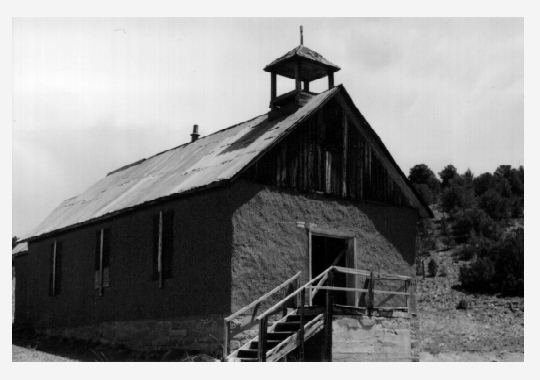
1991 Long's Canon Church, before it burned down, just south of Cokedale
Contributed by Manuel R. Flores MFlores552@aol.com
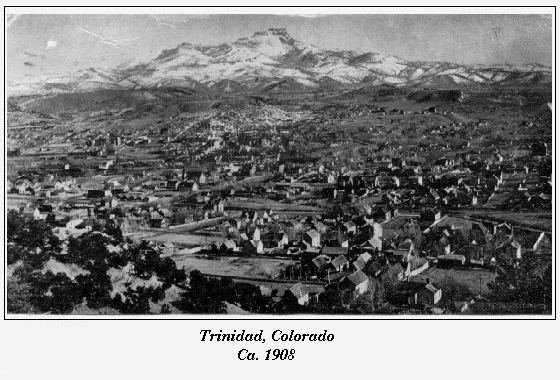
1908 Trinidad
Postcard found in an old book. It was mailed to a family in Rugby, Colorado, an old mining town.
Contributed by Manuel R. Flores MFlores552@aol.com
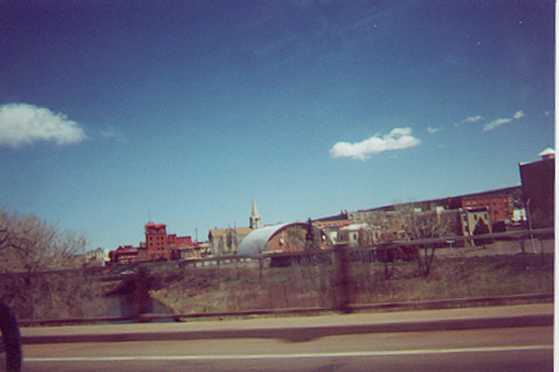
Historic Trinidad
Contributed by Raul and Sundee Maynez raulmaynez@uswest.net
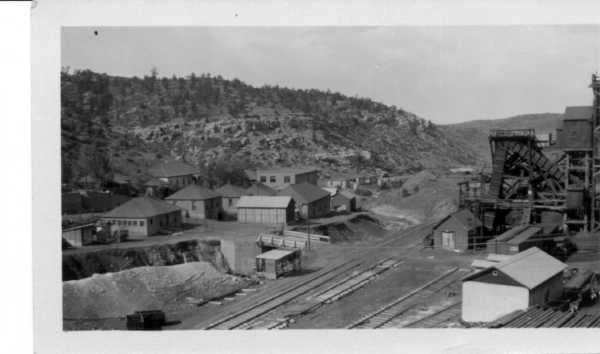
Tollerburg mine and the east part of the town
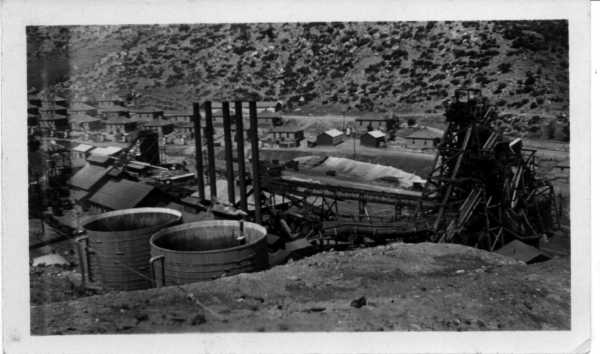
Over looking Tollerburg
Company housed in the background
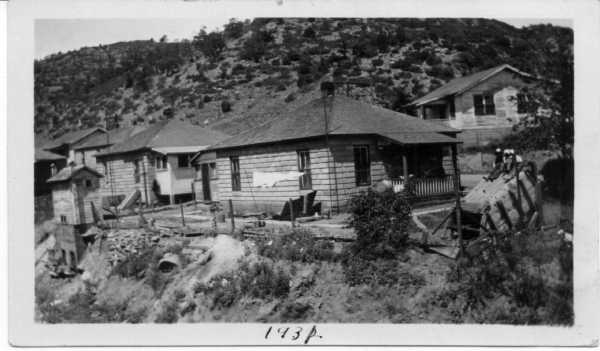
Company house where the STRANGFELD family lived. The house in the upper right is the mine superintendents house.
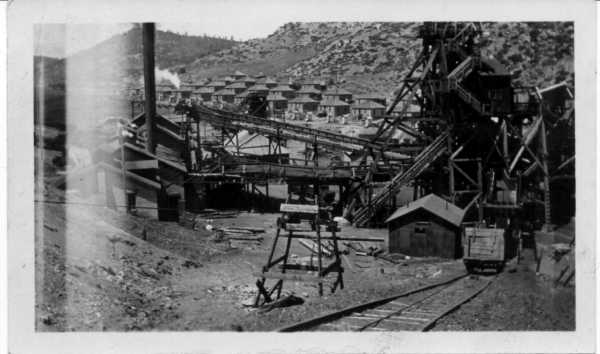
CF&I coal mine photo taken from the slack dump. Hoist for the shaft mine at the right, boiler room on the left. Company housed in the background.
Contributed by Don Strangfeld
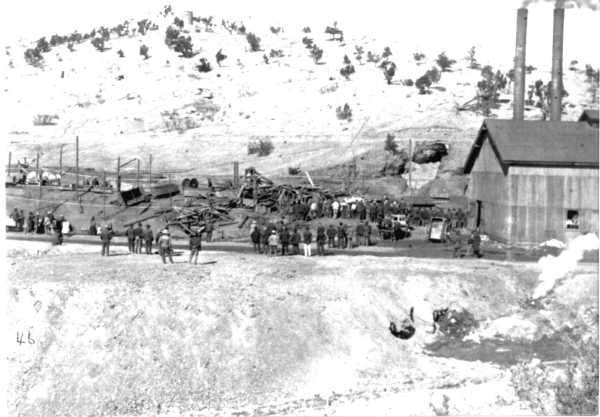
Primero Colorado in Las Animas County. The photo was taken of the entrance to the CF&I coal mine after the explosion that killed 75 miners on 30 Jan 1910.
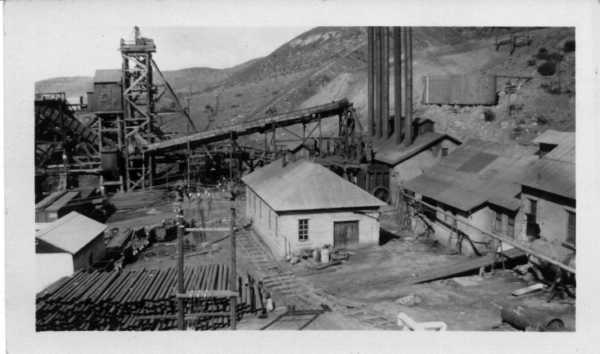
CF&I coal mine. Hoist for the mine is on the left. Mechanical and electrical shops in the center, and the power house in the distant right. Water tanks in the far right of the picture.
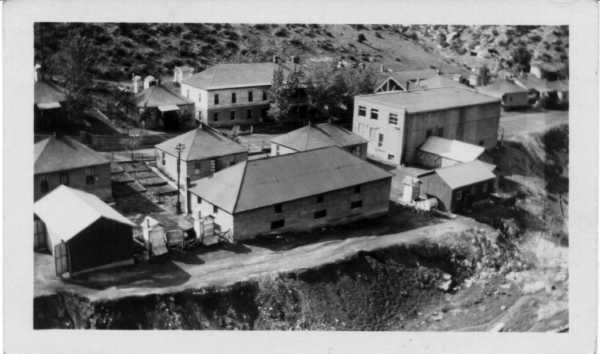
CF&I mine store house across from the mine in the center of the picture. The Company Store (square building) in on the right. In the back-center of the picture is the boarding house. The mine office and the YMCA is to the right of the boarding house.
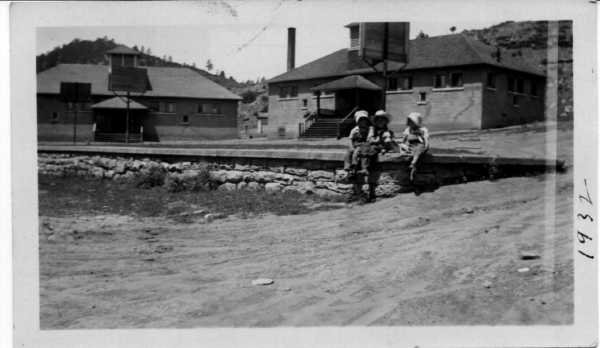
Two school buildings in Tollerburg 1932
Contributed by Don Strangfeld
The Southeastern portion of the Raton Basin in Las Animas County lay along the edge of the "Dust Bowl," and many farm and ranch units were abandoned in the mid 1930's. Under the terms of the Bankhead-Jones Act, the Federal government bought up many marginal farms and ranches. Some of these were sold to neighboring ranchers to create more viable operating units. The remaining lands that were purchased by the government were managed as grazing units. In the years following World War II, these federal holdings were combined as part of the adjacent Comanche National Grasslands under U.S. Forest Service administration. --1978 Las Animas, Huerfano and Custer: three Colorado counties on a cultural frontier: a history of the Raton Basin by Robert A. Murray, page 81.
Copyright © 1996- The USGenWeb® Project, COGenWeb, Las Animas County

This page was last updated
07/12/2026