

a proud part of the USGenWeb Project

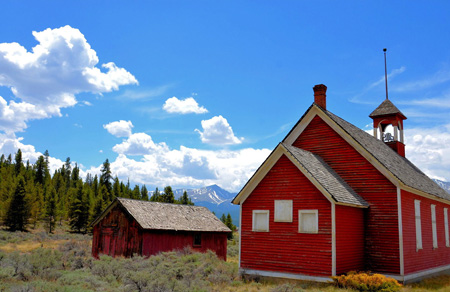 Malta got its start in 1875 when a smelter was built to handle the ores of the Homestake region. By 1878, Malta had two hotels, over fifty homes, a post office, the usual number of saloons and a racetrack. The racetrack was built in 1879 at a cost of $5,000 and became a showplace for horses belonging to the carbonate kings of Leadville. In 1884, Malta was little more than a junction for the Denver and Rio Grande Railroad. The smelters were only marginally successful and as larger and more modern smelters were built in Leadville, Malta simply could not compete. Malta never quite became a ghost town but lingered close to it throughout the years. Malta is located at the mouth of California Gulch, where the early boom in the area took place.
Submitted by Henry Chenoweth.
Old Malta Little Red Schoolhouse and Rocky Mountains near Leadville, Colorado Leadville is noted for its high elevation (over 10,000 feet), the start of Colorado's Silver Boom and the death of Buffalo Bill Cody. Just after leaving the "Two-Mile-High City's" historic district and before reaching Malta, you are treated to this picturesque scene. In the background of this abandoned, little red school house is Mount Massive. At 14,428 feet, it is the Rocky Mountains' second highest peak.
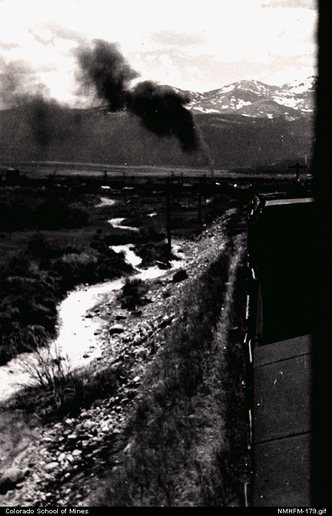 Photograph showing a train on the Denver and Rio Grande line at the town of Malta, which is located at the mouth of California Gulch southwest of Leadville, Colorado.
Malta, which was also known as Swilltown, was established in 1875 to process ores from the region and had the first smelter in the Leadville area.
At its height, Malta had a population of between 300 and 400.
By the early 1880s, Malta had already begun to decline because larger and more modern smelters had been built in and around Leadville.
This page was last updated
Please to not ask for specfic research on your family. I am unable to do your personal research.