Delta County COGenWeb
COGenWeb a proud partner of USGenWeb
Paonia, Delta County
The area was first explored in 1853 by Captain John W. Gunnison of the United States Army. Gunnison was on an expedition to locate a suitable pass through the Rocky Mountains for the Topographical Engineers. The Valley was inhabited by Ute Indians until 1880, when the Ute Indian Reservation was closed by the federal government.
Following the closure of the reservation, the site itself was settled in 1880 by Samuel Wade and William Clark, who had accompanied Enos Hotchkiss to the area from Ohio. The town was officially incorporated in 1902 and had its first election in July of that year. The peony roots that Samuel Wade brought with him to Colorado in 1881 inspired him to submit the Latin name for peony, "Paeonia" as a town name. The post office wouldn't allow the extra vowel, so Paeonia became Paonia. Significant industries include ranching, mining and orchard farming.
Cattle came first, but in 1893, sheep were introduced to the valley. Cowboys organized a secret society called the Cattle Growers Protective Association. When sheep appeared on a cattle range, if legal persuasion failed, sheep were stampeded over bluffs or massacred.
Vast reserves of coal lay buried in the area. The advent of the railroad made the shipping of coal economical and today, coal mining is our major industry.
The Coal Miner Statue
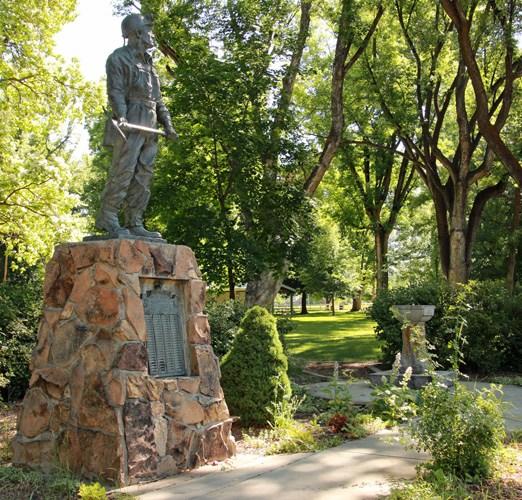 At Paonia Town Park
On April 15, 1981 an explosion at the Mid-Continent Coal Mine, officially known as the Dutch Creek Mine No. 1 outside of Redstone, CO killed 15 coal miners. This disaster reminded many in the North Fork Valley of the dangers involved with coal mining and of the many miners who had died in the coal mines in the North Fork Valley. A group of citizens began an effort to create a monument for the fallen miners of the North Fork Valley. The group was composed of Don Emmons, Harry Galer and Kathy Geddes of Colorado Westmorland Mine; Lloyd Miller, Don Morrow, Joe Vorhees, Galen Reynolds and Ken Pavliseck of the U.S. Steel Mine in Somerset. Vorhees was also president of the United Mine Workers local, Reynolds was vice-president and Pavliseck was secretary/treasurer. The group, represented by Harry Galer, approached the Town of Paonia at the July 28, 1981 Town Board meeting about putting up a statue and a plaque with the names of miners lost in disasters in the area. The Town Board supported the concept and Mayor Donald (Shorty) Wood worked with the group on the project.
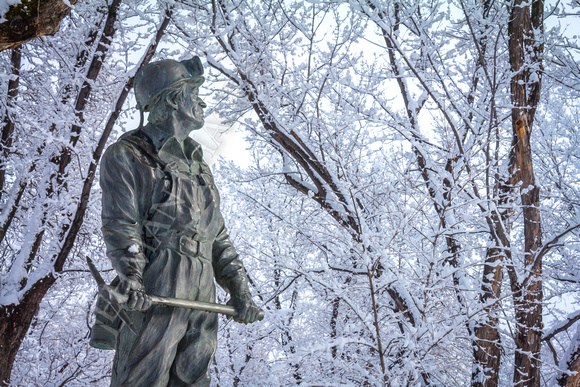 The opportunity to create the sculpture was opened for proposals and several bids varying from $15,000 to $100,000 were received[2]. The group selected a sculptor from Price, Utah to create the statue. Mr. Gary Prazen was hired to create a sculpture of a coal miner for $15,000. Mr. Prazen was a native of Carbon County, Utah with strong ties to the local coal mining industry. Mr. Prazen began his sculpting career with a bronze sculpture of the actor John Wayne who had visited Carbon County in 1978. The sculpture was based on a scene from the 1969 movie True Grit, where Wayne's character Rooster Cogburn faces off against the outlaw Lucky Ned Pepper and three of his henchmen. In the scene, Rooster Cogburn tells Ned Pepper he plans to kill him in one minute or he can surrender and face Judge Roy Parker, where he'll probably end up being hung. Pepper responds, "That is bold talk for a one-eyed fat man." Cogburn calls out, "Fill your hands, you son of a bitch!" and charges the four outlaws with the horse's reins held in his teeth and firing a rifle with his right hand and a pistol in his left. This classic scene is iconic for the movie and John Wayne. Mr. Prazen completed the sculpture and presented it to the actor shortly before his death on June 11, 1979. This sculpture, titled "Fill Your Hands" was the beginning of Mr. Prazen's artistic career. He founded the company Original Creations, Inc. in Helper, Utah in 1980 and went on to create over 300 sculptures. He focused on mining, but created western and wildlife sculptures as well. His sculptures sell all over the world. Mr. Prazen passed away in 2016. He was inducted into the National Mining Hall of Fame in Leadville, Colorado in 2017. Mr. Prazen's son-in-law, Danny Blanton, who took over management of Original Creations, told me he thought the miner statue in Paonia Town Park was the first life-sized sculpture that Gary Prazen created.
 In 1981 and 1982 the group or committee, as they were known, worked at getting donations to cover the $15,000 cost of the sculpture. The mines in the area donated money. These mines included Colorado Westmorland Mine, Bear Coal Mine, U.S. Steel Mine at Somerset, West Elk Mine, Western Slope Carbon Coal Mine and possibly the Blue Ribbon Mine. The United Mine Workers Union donated $5,000. Miners also contributed by raising funds through the Mine Rescue Contests that the mines held to promote mine safety and rescue training. Individual donations were also accepted.
The statue was created and formed by Mr. Prazen in Utah using the lost wax method. It was installed at the Paonia Town Park on November 3, 1982. Additional rockwork on the base and installation of the memorial plaque with the names of the deceased miners completed after that.
The dedication of the memorial was held on a rainy Memorial Day on May 30, 1983. In spite of the rain nearly 100 people showed up for the dedication. There were 62 names listed on the plaque at the time of the dedication. Paonia Mayor Donald Wood accepted the memorial on behalf of the town and told the attendees he would, " strive to keep a proper position in our park for it."
The Miner Statue is a significant piece of artwork that commemorates the hard-working miners who lost their lives in the North Fork coalmines. There are currently sixty-eight names on the plaque. The Town of Paonia cooperated with the coal miner's families in the installation of this memorial thirty-four years ago. The thirty-fifth anniversary of the dedication is coming up in 2018. I recommend the revitalization of this part of the park this next year in time for the thirty-fifth anniversary on Memorial Day. The recommendation of the revitalization is attached.
The photo of the Coal Miner Statue was taken May 8, 2015 by David Bradford.
Paonia Opera House 1906
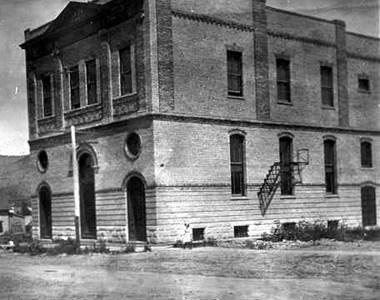 The Paonia Opera House was established in Paonia, Colorado, a community settled in 1880 and incorporated in 1902. The opera house was a community building in this town known for agriculture, and while 1906 is the date you provided, no specific details about the opera house's founding in that year are available from the provided search results.
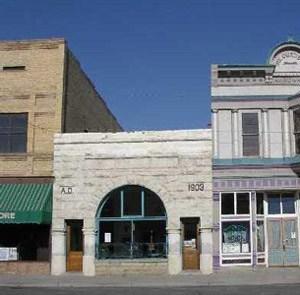 First National Bank Building
Currently part of the Blue Sage Center for the Arts
226 Grand Ave.
State Register 5/18/2005, 5DT.527
The 1903 First National Bank in Paonia is an important downtown commercial building built of locally quarried and cut sandstone. Most of the downtown buildings display 19th century Commercial Italianate elements in wood, while the Bank building utilizes stone and exhibits a Romanesque Revival influence in the arch, stone piers and square cut stone. The building is the work of prominent local stonemasons Al Hurst and Sege Stratton. The Bank is their only known intact commercial work in town, others having been modified extensively. The stonemasons exhibited clearly identifiable ability and skill.
Paonia First Christian Church
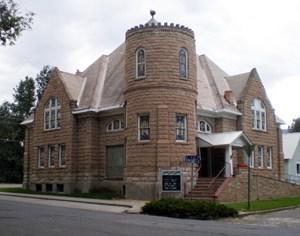 235 Box Elder Ave.
National Register 4/27/2011, 5DT.1375
The Paonia First Christian Church is an excellent example of?Romanesque?style church as interpreted by local craftsmen.? The building, along with several other churches, is in the heart of the residential area of Paonia, which has a long-standing religious identity marked by the high density of churches in the small town.? The building is constructed of regularly coursed, rusticated sandstone with distinctive architectural features such as the round, three-story, crenellated tower with a graduated buttress.
Bruce Estate
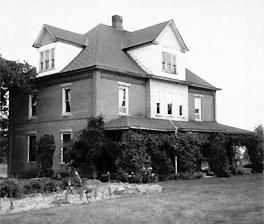
Bruce Estate
1468 Colo. Hwy. 133
State Register 12/8/1993, 5DT.444
Information provided by the Bruce family as follows: Angus R. and Mary Bruce, from Nova Scotia, first settled on what because Bruce Mesa (now Garvin Mesa) in 1886. Angus later established Riverside Ranch, building the Bruce home in 1905 with bricks fired on the property.? He died in 1922 as a result from a fall from a cherry tree.? His son Raymond and wife Laura Taylor remained on the ranch until their deaths.
Original posting ? updated above February, 2020. The residence was constructed between 1905 and 1912, using red bricks made on the site.? John and Sophia Bruce, early pioneers in the North Fork Valley, were first involved in cattle raising.? The family later became successful fruit growers.? Located along the West Elk Loop, a Colorado Scenic and Historic Byway, the large two-story residence features a steeply pitched hipped roof with prominent attic dormers.
This page was